Many shops sell “Chikankari” that is actually machine work and cheap fabric. Real Chikankari is slow handwork done by artisans, so it looks softer, feels better, and usually costs more.
What Is Chikankari?
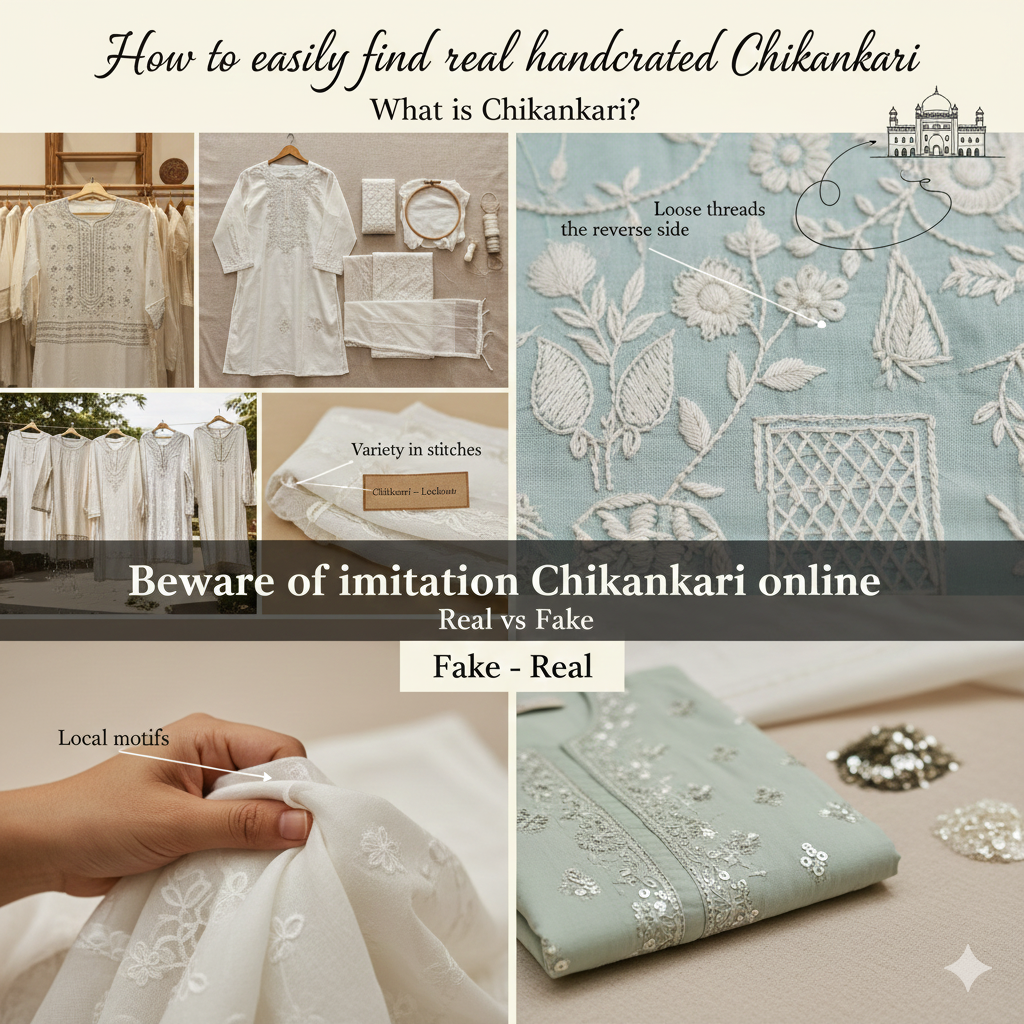
Many shops sell “Chikankari” that is actually machine work and cheap fabric. Real Chikankari is slow handwork done by artisans, so it looks softer, feels better, and usually costs more.
How Chikankari Is Made
First, a pattern is printed on the cloth with blocks. Then an artisan sits and stitches on this pattern by hand. After that, the cloth is washed, dried, and cleaned, and extra threads are trimmed.
Loose Threads on the Back
Turn the kurta or suit and look at the back side of the embroidery. In real handwork, you will see small knots, loose threads, and tiny changes in the pattern. Machine work looks very neat on the back, almost the same as the front, with no extra threads.
Fabric Quality
Original Chikankari is usually done on good fabric like cotton, mal cotton, Chanderi, silk, or pure Georgette. The cloth should feel soft, light, and breathable, not hard or plastic‑like. If you see a thin paper stuck behind the fabric to hold the stitches, it is a sign of weak cloth and poor quality.
Variety in Stitches
Look closely at the embroidery. In real Chikankari, you can spot different types of stitches and small changes in each motif. In fake or machine work, the same flower or design repeats again and again in exactly the same way.
Local Designs and Motifs
Real Chikankari often shows designs inspired by Lucknow—arches, window patterns, flowers, leaves, birds, and the mango (kairi) shape. These motifs tell you the piece is linked to the original craft and not just a random machine pattern.
Embellishments and Extra Work
Sometimes Chikankari has extra work like tiny metal dots (Mukesh) or gota. In good pieces, these are sewn into the cloth. In cheap copies, sequins and decorations are simply pasted or pressed on; they feel rubbery and can peel off easily.
Overall Look of the Embroidery
When you see the full outfit, real Chikankari looks soft, rich, and a bit uneven in a natural way. Machine embroidery looks too perfect and stiff, with every part exactly the same.
Be Careful When Buying Online
Online, some sellers show photos of real handwork but send machine embroidery on poor fabric. Check reviews, zoom in on photos, and look for close‑up shots of the back and the fabric. Choose shops that talk clearly about hand‑embroidered work and how they support artisans.
What We provide
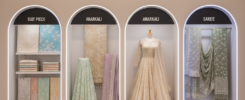
Velvyana provides handcrafted Chikankari clothing and fabrics, made to feel elegant, soft and comfortable. The brand focuses on blending traditional embroidery with modern styles like sarees, unstitched two‑piece sets, suit pieces, kurtis, and dupattas in fabrics such as organza, mulmul, kota and chanderi.